

Ann Fleischer: Henry Kissinger’s First Wife, Her Children and Second Marriage
The name ann fleischer belongs to the woman who shared Henry Kissinger’s life long before the world knew his. She was his first wife, the mother of his two children, and a fellow refugee from the same German city.
Their marriage began in 1949, when Kissinger was a Harvard undergraduate with no public name at all. It lasted fifteen years, ending in divorce in 1964, just before his rise to power.
Ann then built a second, deliberately private life. This is her documented story: a Fürth childhood, flight from Nazi Germany, a Harvard-era marriage, two children, and decades lived away from the spotlight.
Quick Answer
Ann Fleischer (born Anneliese Fleischer on November 6, 1925, in Fürth, Germany) was Henry Kissinger’s first wife. They married on February 6, 1949, had two children, Elizabeth and David, and divorced in 1964. She later married Brandeis professor Saul G. Cohen.
Who Was Ann Fleischer?
Ann Fleischer was a German-born American woman whose place in history comes through one marriage. She wed Henry Kissinger in 1949, when he was still an unknown student.
Unlike her husband, she never sought a public role. She held no office, gave no interviews that survive, and left no memoir, so the record of her life is documented mainly through his biography.
That record still establishes the essentials with confidence. Her birth, her marriage, her children and her second marriage all appear in reference works, obituaries and university records.
Ann Fleischer at a Glance
- Born November 6, 1925, in Fürth, Germany
- Married Henry Kissinger on February 6, 1949
- Mother of Elizabeth Kissinger, born in 1959, and David Kissinger, born in 1961
- Divorced in 1964, after fifteen years of marriage
- Remarried in 1973, to Brandeis chemistry professor Saul G. Cohen
Ann’s story is one of several family histories told in our Celebrity pages, where the relatives of famous figures get their own hearing. The first marriage of Chuck Norris, covered in our dianne holechek profile, follows a similarly private woman through a famous husband’s early years.
Ann Fleischer: Quick Biography and Personal Details
The documented facts of Ann Fleischer’s life fit into a short table. Anything beyond these points should be treated with care, because later online summaries often repeat claims that no primary record supports.
| Detail | Information |
|---|---|
| Full name | Anneliese “Ann” Fleischer |
| Born | November 6, 1925 |
| Birthplace | Fürth, Bavaria, Germany |
| Known for | First wife of Henry Kissinger |
| First marriage | Henry Kissinger, married February 6, 1949 |
| Divorce | 1964 |
| Children | Elizabeth Kissinger (born 1959) and David Kissinger (born 1961) |
| Second marriage | Saul G. Cohen, married 1973 |
| Profession | Bookkeeper, as reported in Kissinger’s obituaries |
| Net worth | Not publicly documented |
| Later life | Lived privately; recorded as living in April 2010 |
Two cautions belong beside any summary of her life. First, the firmest facts are the ones anchored in records: a birth entry, two marriages, two children.
Second, her later decades are documented only in outline. She was alive in April 2010, when her second husband’s obituary named her as his widow, and no reliable public record of her death has appeared since.
Early Life and German-Jewish Background
Ann Fleischer was born on November 6, 1925, in Fürth, a Bavarian city beside Nuremberg with a Jewish community centuries old. Henry Kissinger had been born in the same city two years earlier.
Fürth was sometimes called the Franconian Jerusalem for the size and learning of its Jewish population. Synagogues, schools and printing houses had made it a centre of Jewish life in southern Germany.
That world was already under threat in Ann’s childhood. What survives about her earliest years is the setting rather than the detail: a Jewish family in a city whose Jewish life was about to be destroyed.
The Historical Circumstances of Her Generation
Adolf Hitler’s rise to power in 1933 brought discriminatory laws that steadily stripped German Jews of their rights, livelihoods and safety. Jewish children were pushed out of schools and public life.
The violence culminated, before the war, in the November 1938 pogroms known as Kristallnacht. Synagogues burned across Germany, Jewish businesses were smashed, and thousands of Jewish men were sent to camps.
For families like the Fleischers and the Kissingers, emigration became a matter of survival. Leaving meant visas, sponsors, money and luck, and many who waited too long never got out.
Growing Up Between Two Cultures
The Kissinger family fled Fürth in 1938 and settled in the Washington Heights neighbourhood of New York. The Washington Post’s obituary of Henry Kissinger identifies Ann as a fellow refugee from Germany.
Refugee children in New York grew up translating between two worlds. At home there was German speech, German food and European manners; outside there was English, American school and American expectations.
Ann and Henry shared that double inheritance before they shared anything else. Both were Fürth-born, Jewish, and remade by exile, and both were educated in New York’s public schools.
Ann Fleischer and Henry Kissinger: How Their Relationship Began
The Washington Post describes Ann as Kissinger’s high school girlfriend, and other obituary accounts call her his high school sweetheart. The two had known each other since their schooldays in New York.
Their courtship ran through the war years. Kissinger was drafted into the United States Army in 1943, served in Germany, and returned to enter Harvard College in 1947.
They married on February 6, 1949, while he was still an undergraduate. The Nobel Prize organisation’s biography of Kissinger records the marriage in 1949 and its end in 1964.
A Relationship Before International Recognition
Nothing about the wedding pointed to future fame. The groom was a 25-year-old student veteran; the bride was a 23-year-old bookkeeper building her own working life in America.
Kissinger graduated from Harvard College summa cum laude in 1950. His celebrated undergraduate thesis, reportedly so long that Harvard later limited thesis length, marked him out as a scholar, not yet a statesman.
Ann therefore knew the private version of Henry Kissinger first. The public figure, the diplomat of détente and shuttle diplomacy, was assembled during and after their marriage, not before it.
Their Shared Immigrant Experience
Shared origins gave the young couple a common language in every sense. Both families had lost a homeland, and both had rebuilt in the same corner of New York.
Washington Heights in those years held so many German Jewish refugees that it was nicknamed Frankfurt on the Hudson. Shops, synagogues and cafés served a community living between gratitude and grief.
Historians cannot say how much that background explains the marriage itself. What it plainly gave them was a world in common, at an age when both were still becoming American.
Ann Fleischer and Henry Kissinger’s Marriage
The marriage lasted from February 1949 until the divorce of 1964. Those fifteen years cover Kissinger’s whole formation: Harvard degrees, his first books, his faculty appointment and his earliest government consulting.
Ann’s role in that household is documented only in outline. She worked, raised two children born late in the marriage, and kept the family’s private life out of print.
The marriage ended five years before Kissinger entered government. Ann never lived in Washington as an official’s wife, and she never appeared in the photographs of his famous years.
What Was Happening in Henry Kissinger’s Life?
His timeline shows how completely the marriage belonged to the academic chapter of his life. Every famous office came afterwards, under a different marriage.
| Year | Henry Kissinger’s milestone |
|---|---|
| 1923 | Born in Fürth, Germany, on May 27 |
| 1938 | Emigrated with his family to New York |
| 1943 | Became a naturalised American citizen; joined the US Army |
| 1949 | Married Ann Fleischer |
| 1950 | Graduated from Harvard College |
| 1952 | Completed his master’s degree |
| 1954 | Earned his PhD |
| 1959 | Daughter Elizabeth born |
| 1961 | Son David born |
| 1964 | Divorced Ann Fleischer |
| 1969 | Became national security adviser |
| 1973 | Became secretary of state; received the Nobel Peace Prize |
| 1974 | Married Nancy Maginnes |
| 2023 | Died on November 29, aged 100 |
Read against that table, the marriage looks less like a footnote and more like a foundation. The degrees, the doctorate and the first reputation were all built while Ann was his wife.
Notice where the table’s famous entries fall. Everything from 1969 onward postdates the marriage, which is why photographs of Secretary Kissinger never show Ann, however often captions imply a wife of that era.
Life During His Academic Career
Kissinger’s Harvard career advanced quickly after his 1954 doctorate. He joined the faculty, directed study programmes, and published Nuclear Weapons and Foreign Policy in 1957, which made his scholarly name.
His doctoral research reached back to the Europe his family had fled. He wrote on the post-Napoleonic settlement, studying Metternich and Castlereagh and the management of great-power rivalry.
Consulting work for Washington began in these years, quietly. Ann’s household in Cambridge was the base from which the future secretary of state commuted between scholarship and government.
Why Their Marriage Attracts Historical Interest
Interest in the marriage is really interest in the making of Kissinger. Biographers return to the Harvard years because they explain the diplomat, and Ann was central to those years.
The marriage also marks a contrast that readers notice. His second marriage, to Nancy Maginnes in 1974, belonged to fame; his first belonged to study, work and young children.
Finally, the marriage matters because Ann’s near-absence from the record is itself a fact. She shows how completely a spouse can stand outside a famous life while sharing its beginnings.
Ann Fleischer’s Children: Elizabeth and David Kissinger
Ann and Henry had two children, both born in the last years of the marriage. Elizabeth arrived in 1959 and David in 1961, when their father was already a rising Harvard professor.
The children were young when their parents divorced in 1964. Their upbringing belonged to their mother’s private household rather than to their father’s increasingly public world.
Both have lived adult lives largely outside politics. Elizabeth keeps a private profile, while David built a documented career in American television.
Elizabeth Kissinger
Elizabeth Kissinger, born in 1959, is the couple’s elder child and only daughter. She has consistently avoided public attention, and reliable published detail about her life is limited.
She appears in the record mainly at family points of reference. Brandeis University’s obituary for her stepfather, Saul G. Cohen, lists her among his stepchildren, alongside her brother David.
That scarcity of information is best respected rather than filled in. Nothing reliable supports the invented careers and biographies that some websites attach to her name.
David Kissinger
David Kissinger, born in 1961, chose entertainment over diplomacy. He served as an executive with NBC Universal Television Studio, working in American television production.
In 2005 he became head of Conaco, the production company of comedian Conan O’Brien. The role made him a recognised figure in late-night television, on his own professional terms.
His career is a useful reminder that the Kissinger name continued in two directions. One led to the State Department; the other, a generation later, led to a television studio.
Why Family Information Matters
The children explain why Ann’s name keeps surfacing in serious sources. She is not only a former wife in a biography; she is the mother of Kissinger’s only children.
Family threads like hers run through many lives in our Celebrity pages, from william langston thornton, the son of Billy Bob Thornton, to savani quintanilla, who carries a famous musical family’s next generation.
For researchers, the distinction matters. Ann’s biography, her children’s biographies and her former husband’s biography are three separate subjects, and good accounts keep them separate.
Ann Fleischer’s Divorce from Henry Kissinger
The marriage ended in divorce in 1964, fifteen years after the wedding. Neither party ever gave a public account of the separation, and no reliable record explains it.
What can be said is circumstantial. Kissinger’s career was pulling him toward Washington consulting and longer absences, while the family’s life remained private and Cambridge-based.
The divorce closed the first chapter of his personal life cleanly. When fame arrived at the decade’s end, it arrived in a new household, and Ann was already elsewhere.
Why Did Ann Fleischer and Henry Kissinger Divorce?
No documented answer exists, and honesty requires saying so plainly. The questions the record leaves open include the following.
- Neither Ann nor Henry ever published an explanation of the split
- No contemporary newspaper account of the divorce proceedings survives in the standard record
- Biographers note the fact of the 1964 divorce without an agreed cause
- The pressures of his rising career are context, not a documented reason
- Later claims about the marriage found online trace to no primary source
Serious biographies of Kissinger record the divorce in a sentence and move on. That restraint is worth copying, because invention rushes in wherever documentation stops.
The Timing of the Divorce
The date itself is historically interesting. In 1964 Kissinger was a Harvard professor with a growing reputation, five years from the White House and nine from the State Department.
Had the marriage lasted five more years, Ann would have been a national security adviser’s wife, photographed and profiled. The divorce spared her, or cost her, that entire public existence.
Instead, 1964 returned her to private life while she was still in her thirties. She had two small children, her own work, and nearly a decade before her second marriage.
Did Ann Fleischer Remarry After Her Divorce?
Yes. Ann remarried in 1973, nine years after her divorce, becoming the wife of Dr Saul G. Cohen, a distinguished chemist at Brandeis University in Massachusetts.
Time magazine’s Milestones column recorded the marriage that year, naming her as Ann Fleischer Kissinger. The marriage lasted until Cohen’s death in 2010, thirty-seven years later.
By duration, the Cohen marriage was by far the longer of her two marriages. It was also the quieter, lived in Lexington, Massachusetts, inside an academic community rather than a political one.
Who Was Saul G. Cohen?
Saul G. Cohen joined the Brandeis faculty in 1950, after anti-Semitism had blocked teaching jobs elsewhere. He became the young university’s first chair of chemistry and of its science school.
Brandeis remembers him as its first dean of faculty and its first University Professor. In the 1940s he had worked alongside Edwin Land of Polaroid on the chemistry that stabilised instant film.
He received the American Chemical Society’s James F. Norris Award in 1972 and an honorary Brandeis degree on retiring in 1986. He died on April 24, 2010, aged 93, leaving his wife Anneliese and nine grandchildren.
Ann Fleischer’s Connection to Henry Kissinger’s Political Career
Ann’s connection to Kissinger’s political career is one of timing. She was married to the scholar who became a statesman, but the marriage ended before the statesman’s career began.
Every office that made him famous came after 1964. The national security advisership, the opening to China, the Paris Peace Accords and the Nobel Peace Prize all belong to the 1970s.
Her connection is therefore biographical rather than political. She knew the man in formation; the world met the finished figure under his second wife, Nancy.
Kissinger’s Rise to National Security Adviser
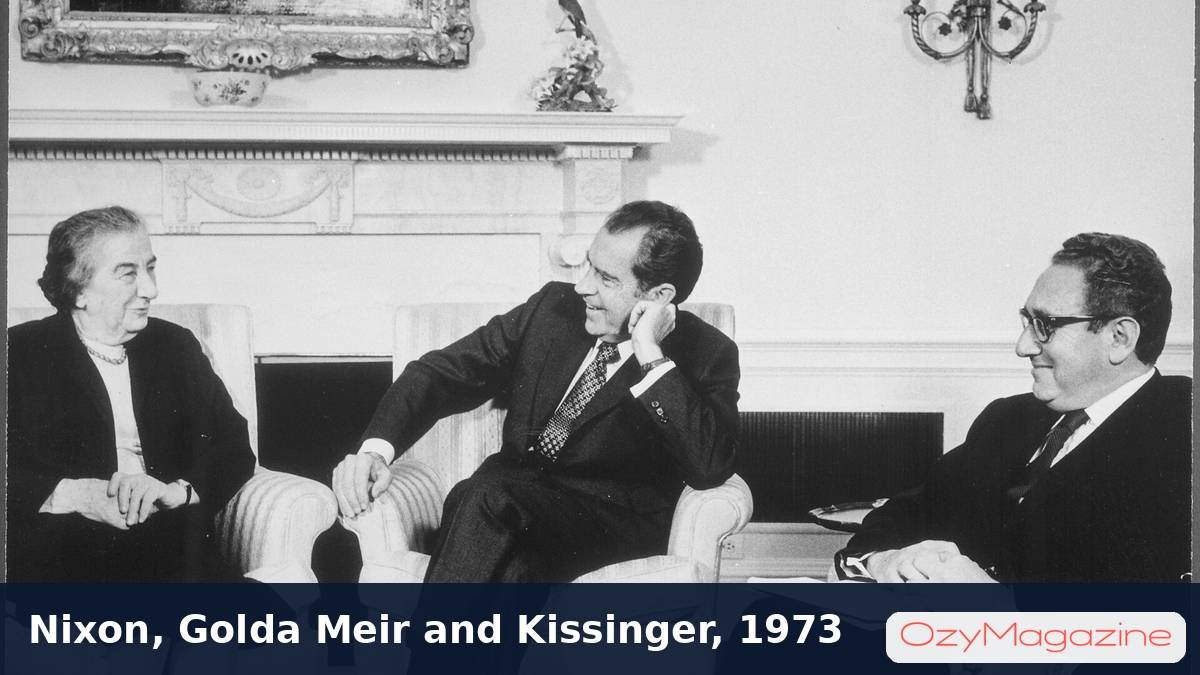
Kissinger’s government ascent began in January 1969, when President Richard Nixon appointed him national security adviser. From the White House he ran much of American foreign policy.
The role had been prepared during his Harvard years, when he advised campaigns and agencies from Cambridge. Those advisory years, unlike the office itself, did overlap the end of his first marriage.
Ann’s distance from this rise was complete. There is no record of her commenting on his appointment, his policies or his growing fame, then or later.
His Appointment as Secretary of State
In September 1973 Kissinger became secretary of state, the first naturalised citizen to hold the office. He kept the national security role as well, concentrating unusual power in one pair of hands.
That same year he received the Nobel Peace Prize for the Paris agreement on Vietnam, an award that remains debated. Ann, remarried that same year, watched none of it from inside.
The contrast between the two 1973 marriages is striking. His second wedding, to Nancy Maginnes in March 1974, was society news; Ann’s wedding to Cohen passed with a single magazine notice.
Ann’s Life Should Not Be Reduced to Kissinger’s Achievements
It is easy to write Ann’s life as a prelude to someone else’s. The documentary record resists that reading: she had a working life before him and a long marriage after him.
Her thirty-seven years with Saul Cohen exceed her fifteen with Kissinger by more than two decades. By any fair accounting, the Brandeis years are the larger part of her adult story.
Remembering that balance is the point of telling her story separately. She was a participant in her own life, not an attendant figure in his.
Ann Fleischer’s Profession and Career
The Washington Post’s obituary of Kissinger describes Ann as having worked as a bookkeeper. It is the one professional detail about her that a major source states plainly.
Bookkeeping was skilled, trusted work, and in the 1940s it was among the better clerical occupations open to women. For a refugee building an American life, it meant wages, standing and independence.
No source documents a later public career. After her marriages she appears in the record as a wife, mother and stepmother within academic households, and nothing firmer can responsibly be added.
What Does Her Work as a Bookkeeper Tell Us?
It tells us she worked for a living in the years when Kissinger was a student. The household that produced a Harvard doctorate was supported, in part, by her wages.
That pattern was common in postwar academic marriages and rarely credited. The degree is remembered; the bookkeeping that helped pay for the household is not.
It also fits the refugee story. Immigrant families pooled earnings, and a daughter with bookkeeping skills held a portable trade that no border could confiscate.
Did Ann Fleischer Have a Public Career?
No public career is documented. She held no office, published nothing under her name, and founded no organisation that records preserve.
That absence should not be read as an absence of work. Raising two children and running households across two long marriages is labour, whether or not it leaves a public trace.
The accurate statement is a narrow one: her documented occupation is bookkeeping, reported by the Washington Post, and her later life was private.
Ann Fleischer’s Personality and Private Lifestyle
Ann’s personality cannot be reconstructed from reliable sources, and this account will not pretend otherwise. No interviews, letters or memoirs of hers are in the public record.
What can be described is a pattern of choices. She stayed out of print during a famous marriage, declined attention after it, and built a second life in a university town.
Privacy on that scale, maintained for six decades, is itself the clearest evidence about her. Whatever her temperament, her preference for life off the record never wavered.
Why Did Ann Remain Outside the Public Spotlight?
Part of the answer is timing. She left the marriage before the spotlight existed, so privacy required no effort of retreat; it was simply where she already lived.
Part is opportunity forgone. As the mother of Kissinger’s children she could have sold stories or written a memoir during his famous decades, when publishers paid well for both.
She did neither. No tell-all appeared in the 1970s, no interview in the decades after, and no public comment when Kissinger died in 2023.
Privacy as an Important Part of Her Historical Identity
Her privacy is not a gap in her story; it is her story’s defining feature. The archive’s silence about Ann is the result of her own consistent decisions.
Historians handle such figures carefully. The honest method is to document what records prove, mark what they suggest, and leave the rest respectfully blank.
That is why her biography reads differently from her former husband’s. His is built from millions of documents; hers, from a handful, handled here as carefully as they deserve.
Ann Fleischer’s Age, Birthplace, and Nationality
Ann Fleischer was born on November 6, 1925, in Fürth, Germany, and so was German by birth. She became an American by upbringing and adult life, educated in New York.
The birth date is the one carried consistently across the biographical record. It appears in Henry Kissinger’s reference biography, where it was drawn from United States passenger records.
On that date, she turned 101 in November 2026 if still living. Her current status, as the next sections explain, is not publicly confirmed either way.
Was Ann Fleischer German?
Yes, by birth and by her first eighteen years of formation. She was born in Bavaria in 1925, into a Jewish family whose roots in Franconia ran deep.
Persecution rewrote that identity. The Germany of her childhood expelled its Jewish citizens in stages, and families like hers rebuilt as Americans, carrying the language and losses with them.
Her nationality on paper changed with emigration and naturalisation, as it did for Kissinger in 1943. Culturally she belonged to the German Jewish refugee generation of New York.
What Was Her Connection to Fürth?
Fürth is the hinge of the whole story. Both Ann and Henry were born there, she in 1925 and he in 1923, into the same embattled Jewish community.
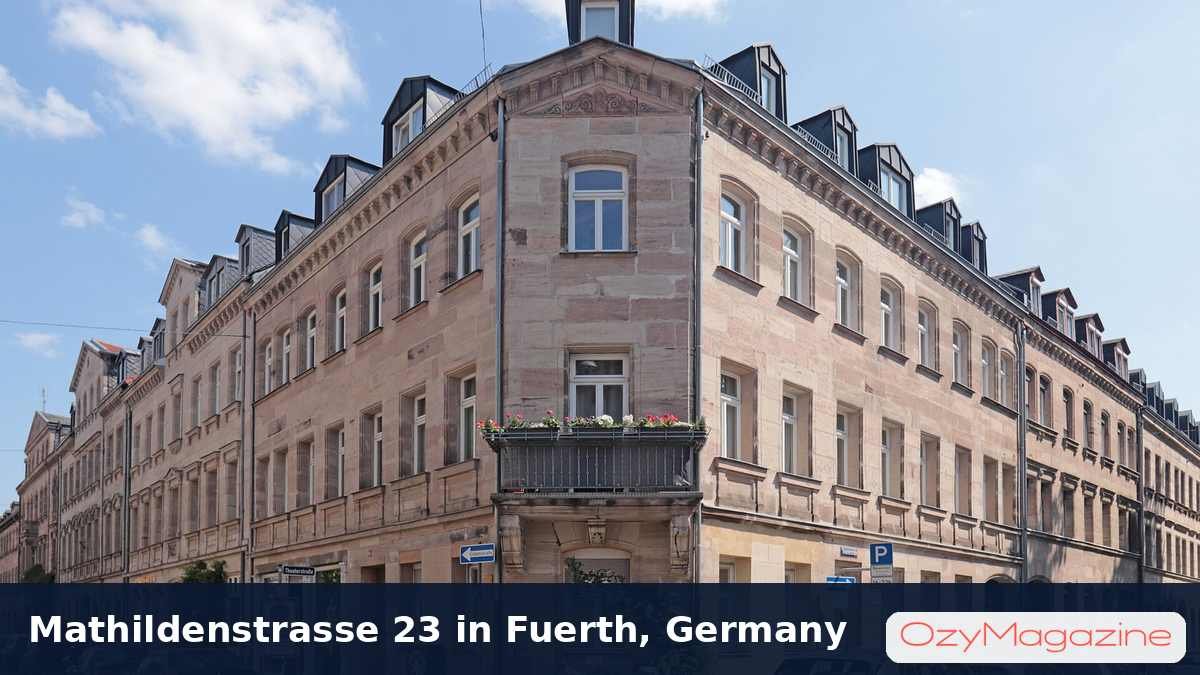
Kissinger’s birthplace house still stands on Mathildenstraße, a reminder of the ordinary streets from which both families were driven. Fürth, which made him an honorary citizen, welcomed him back in June 2023 for a final visit, weeks after his hundredth birthday.
Whether the two families knew each other in Fürth is not documented. Their documented meeting ground is New York, where both arrived as refugees and attended school.
Ann Fleischer’s Net Worth and Financial Status
Ann Fleischer’s net worth is not publicly documented, and no reliable figure exists. She left no estate reporting, no financial disclosures and no public business interests for anyone to total.
Websites that print an exact fortune for her are inventing it. A private citizen who held no office was never required to disclose assets, and none were disclosed.
The honest answer is also the complete one: her finances were private, her second husband was a salaried professor, and nothing in the record supports a number.
Was Ann Fleischer Wealthy Because of Henry Kissinger?
There is no evidence for the assumption behind the question. The divorce came in 1964, when Kissinger was a professor whose wealth lay in reputation, not riches.
His lucrative years, the consultancy and speaking fees, came decades later, long after their finances had separated. Whatever settlement the divorce involved was never made public.
Her later household was a professor’s household at Brandeis. Comfortable academic circumstances can be inferred from Cohen’s career, but inference is all it is.
Why Online Net-Worth Estimates Can Be Misleading
Estimates for private people fail at the first step, because there is nothing to estimate from. The figures circulating online collapse under a few simple checks.
- No public salary, property or business records exist for her
- Divorce settlements from 1964 were not published and cannot be priced
- A spouse’s later earnings do not transfer across a divorce decades earlier
- Sites copy figures from one another without naming any source
- Round numbers attached to private citizens are marketing, not research
Readers should treat any precise net-worth figure for Ann Fleischer as fiction. The documented position is that her financial status was never made public.
The question persists because of the surname. Association with a man who later earned millions invites an assumption of shared wealth that the chronology, a 1964 divorce, simply does not support.
Where Is Ann Fleischer Today?
The last firm point in her record is April 2010. Brandeis University’s obituary for Saul G. Cohen, who died on April 24 that year, names his wife Anneliese among his survivors.
After 2010, the reliable record stops. No obituary from a reputable outlet, no family statement and no official notice has established whether she is living or when she may have died.
Claims online that she died in various years contradict one another and cite nothing checkable. Several appear to confuse her death with her second husband’s in 2010.
Why Information About Her Later Life Is Limited
Her later life was lived in Lexington, Massachusetts, within the Brandeis community, far from any institution that publishes personal news. University obituaries record faculty, not spouses’ later years.
She also outlived the era of her public connection. Kissinger’s death in November 2023 brought obituaries that named her as his first wife, but none reported her own status.
The result is an open ending, unusual for a historical figure. Unless family or official records emerge, her story after 2010 remains undocumented, and this account leaves it there.
Ann Fleischer and Nancy Maginnes: Understanding the Difference
Confusion between Kissinger’s two wives is common, because both marriages are usually compressed into a line. They were different women from different worlds, married to him in different centuries of his life.
Ann was the refugee contemporary, married at 23 in 1949 and divorced in 1964. Nancy Maginnes was the Washington insider, married in 1974 and widowed by his death in 2023.
The table below keeps the distinction straight, using only documented points.
| Detail | Ann Fleischer | Nancy Maginnes |
|---|---|---|
| Relationship | First wife | Second wife |
| Marriage year | 1949 | 1974 |
| Marriage ended | Divorce, 1964 | Kissinger’s death, 2023 |
| Children with Kissinger | Elizabeth and David | None |
| Historical association | His student and Harvard years | His diplomatic and public years |
Who Was Nancy Maginnes?
Nancy Maginnes worked for Nelson Rockefeller, the New York governor and later vice president, where Kissinger, a Rockefeller adviser, first knew her. She was an aide in the world he was entering.
They married on March 30, 1974, in Arlington, Virginia, while he was secretary of state. The marriage lasted forty-nine years, until his death at 100 in November 2023.
Nancy became a public figure in her own right, photographed at state occasions for decades. She had no children with Kissinger; his only children remained Ann’s.
Why the Distinction Matters
The distinction matters because the two marriages explain two different men. The student who married Ann in 1949 had no power; the statesman who married Nancy in 1974 stood at its summit.
Crediting the wrong wife scrambles the chronology of his life. Ann belongs to the refugee and Harvard story; Nancy belongs to Washington, and accounts should keep them in their places.
It also matters for Ann’s sake. She is frequently misdescribed as the wife of his famous years, a role she never held and, on the evidence, never wanted.
The Historical Importance of Ann Fleischer’s Story
Ann’s story matters beyond one marriage certificate. It preserves the experience of a generation of German Jewish refugees whose private lives underpin very public American history.
It also corrects the shape of Kissinger’s biography. His formation happened inside a family, and the family was Ann’s as much as his during the decisive Harvard years.
Finally, her story demonstrates the value of the unpublic life. Not every figure adjacent to power sought it, and the record is richer for noticing those who declined.
1. The Experience of Jewish Refugees
Ann belonged to the generation that escaped Nazi Germany as children and teenagers. Roughly 100,000 German Jews reached the United States in the 1930s, rebuilding under quota limits and suspicion.
Washington Heights, where her story intersects Kissinger’s, became the emblem of that rebuilding. Its synagogues, schools and shops carried a whole transplanted culture through the century.
Her biography gives that collective experience a single face. Behind the statistics of emigration stands a schoolgirl who became a bookkeeper, a wife and a mother in a new country.
2. The Importance of Family History
Great-man history often treats families as scenery. Ann’s case shows the cost: remove the first marriage and Kissinger’s Harvard decade loses its household, its wages and its children.
Family history also explains continuities that politics cannot. His only children, his grandchildren and his family’s private loyalties all descend from the marriage to Ann.
Recording her properly is therefore not sentimentality. It is accuracy about where a public life actually came from.
3. Women’s Work in the Twentieth Century
Ann’s bookkeeping belongs to a wider story. Clerical work was the largest female occupation in mid-century America, and immigrant daughters staffed much of it.
Such work underwrote households, educations and businesses while remaining nearly invisible in the historical record. Her one documented job title stands for millions of similar, unrecorded ones.
Her later life raises the companion point. The labour of two long marriages and two children left no occupational trace at all, which says more about record-keeping than about her.
4. The Importance of Historical Accuracy
Ann’s thin file attracts invention. Websites supply her with parents, careers, fortunes and death dates that no record supports, each copied from the last.
Her case is a tidy lesson in checking. A birth date traced to passenger records is evidence; a death date traced to another website is not.
Accuracy here is a form of respect. A woman who guarded her privacy for a century deserves better than a biography assembled from rumours.
What Happened to Ann Fleischer After Her Divorce?
After 1964 Ann disappears almost completely from print, which appears to have been the intention. She raised Elizabeth and David away from publicity as their father’s fame grew.
Nine years later she remarried, to Saul G. Cohen of Brandeis, and settled in Massachusetts. The marriage gave her a second family: Cohen’s two children became her stepchildren, as hers became his.
She was widowed in 2010 after thirty-seven years of marriage. Beyond that point, as noted above, the reliable record ends, and her later life is undocumented.
How to Research Ann Fleischer: Reliable Sources and Common Mistakes
Researching Ann means researching around her, through the documented lives she touched. The strongest material sits in institutional records rather than in the summaries that dominate search results.
Start with reference biographies of Kissinger, university publications and contemporary newspaper notices. Treat every unsourced exact claim, especially about money and death, as unproven until a record appears.
Brandeis University deserves a place on that list for the second marriage. Its magazine’s obituary and appreciation of Saul G. Cohen fix his career, his death in April 2010 and his widow’s name, Anneliese, in an institutional record.
Nobel Prize Biography of Henry Kissinger
The Nobel Prize organisation publishes a biographical account of its 1973 laureate. It confirms the framework of Ann’s marriage: the wedding in 1949 and the divorce in 1964.
Nobel biographies are short and conservative, which is their value. They print only what the organisation can stand behind, making them a sound check on dates.
The same biography fixes Kissinger’s own starting points, his birth in Fürth on May 27, 1923, and his emigration. Those anchors help researchers confirm they have the right family before trusting any detail about it.
United States Department of State
The State Department’s Office of the Historian documents Kissinger’s tenure in detail. It cannot tell researchers about Ann directly, but it fixes the chronology of the career she preceded.
Its timelines settle the sequence that matters here: national security adviser in 1969, secretary of state in 1973, and the diplomatic record that followed.
The Washington Post
The Washington Post’s 2023 obituary of Kissinger is the single most useful newspaper source on Ann. It identifies her as his high school girlfriend and a fellow German refugee.
The same obituary reports her work as a bookkeeper. Because the Post checks obituary facts rigorously, its few sentences on Ann outweigh pages of unsourced online biography.
One caution applies even here. Syndication repeats a single obituary across hundreds of outlets, so a fact appearing everywhere may still rest on one newsroom’s reporting rather than on many independent checks.
Library of Congress
The Library of Congress holds Kissinger-related papers, photographs and oral histories. Collections of this kind anchor dates and identities in material created at the time.
For family questions, its newspaper and immigration holdings are the practical route. Passenger records, like the Massachusetts lists behind her birth date, are the researcher’s best friends.
Common Mistakes to Avoid
Most errors about Ann come from a handful of habits. The following mistakes account for nearly every false claim in circulation about her.
One preliminary trap is her name itself. She appears as Anneliese Fleischer in her youth, as Ann Fleischer Kissinger after her first marriage, and as Anneliese Cohen in her second husband’s Brandeis obituary, and searches under only one form miss records.
- Treating a website’s exact date as evidence when it cites no record
- Confusing her death with her second husband’s death in 2010
- Crediting her with a role in Kissinger’s Washington years, which she never had
- Mixing her up with Nancy Maginnes, the second wife
- Repeating net-worth figures that no document supports
Avoid those, and the remaining story is short but solid. It is the story told here, and it is enough.
Frequently Asked Questions About Ann Fleischer
1. Who Is Ann Fleischer?
Ann Fleischer, born Anneliese Fleischer, was Henry Kissinger’s first wife. A German Jewish refugee from Fürth, she married him in 1949, had two children with him, and divorced him in 1964.
2. When Did Ann Fleischer Marry Henry Kissinger?
They married on February 6, 1949, in the United States. He was a Harvard undergraduate and army veteran; she was working as a bookkeeper in New York.
3. Did Ann Fleischer and Henry Kissinger Have Children?
Yes, two. Elizabeth was born in 1959 and David in 1961, and they remained Kissinger’s only children. David later worked in television, heading Conan O’Brien’s production company, Conaco.
4. Why Did Ann Fleischer and Henry Kissinger Divorce?
No reason is documented. Neither party explained the 1964 divorce publicly, and biographies record the fact without an agreed cause, so any specific explanation offered online is speculation.
5. Is Ann Fleischer Still Alive?
Her status is not publicly confirmed. She was alive in April 2010, when her second husband’s Brandeis obituary named her as his widow, and no reliable record of her death has been published since.
6. Did Ann Fleischer Marry Someone After Henry Kissinger?
Yes. In 1973 she married Dr Saul G. Cohen, a chemistry professor at Brandeis University, a marriage recorded by Time magazine. They remained married until his death in 2010.
7. What Was Ann Fleischer’s Profession?
Bookkeeper, according to the Washington Post’s obituary of Kissinger. No other occupation is reliably documented, and she had no public career.
8. What Was Ann Fleischer’s Net Worth?
It is not publicly documented. She held no office and made no financial disclosures, so the exact figures printed by some websites have no source and should not be believed.
9. Where Was Ann Fleischer Born?
She was born in Fürth, Bavaria, Germany, the same city where Henry Kissinger was born two years earlier. The city had one of southern Germany’s oldest Jewish communities.
10. How Was Ann Fleischer Connected to Nancy Maginnes?
Only through Kissinger. Ann was his first wife, from 1949 to 1964; Nancy Maginnes was his second, from 1974 until his death in 2023, and the two women are often confused.
When Was Ann Fleischer Born?
She was born on November 6, 1925. The date is carried in Henry Kissinger’s reference biography, where it was drawn from United States passenger records, and it is consistent across the record.
Did Ann Fleischer Ever Speak Publicly About Kissinger?
No public statement by her is recorded. Through his famous decades, his death in 2023 and everything between, she gave no interview and published nothing, keeping the privacy she had chosen in 1964.
Conclusion
Ann Fleischer’s documented life is a short file with a long reach. Born in Fürth in 1925, exiled as a girl, she married a fellow refugee in 1949 and shared his obscure, striving years.
The marriage gave Kissinger his only children and gave her a first adulthood of work and family. Its end in 1964 returned her to the privacy she kept for the rest of her life.
Her second marriage, to Saul G. Cohen, lasted thirty-seven years, longer than the famous one by far. That balance, more than any single date, is the truest summary of her life.
Final Thoughts on Ann Fleischer
Ann Fleischer spent a century adjacent to history without once asking it for attention. The record she left is small because she intended it to be, and it deserves to be read on those terms.
For the public career that ran alongside her private one, the diplomacy, the Nobel Prize and the long Washington afterlife are documented in full in the standard Henry Kissinger biography. Ann’s own chapter, by her consistent choice, stays mostly closed.
What remains is enough: a birth in Fürth, a flight from persecution, two marriages, two children, and a privacy kept intact for a hundred years. Few lives so close to power have left so deliberate a silence.





4 Comments