Is Peter Orszag Bald? What His Hair Really Looks Like Now
Plenty of searchers land on one blunt query — peter orszag bald — expecting a yes or a no. The honest answer is no: dated photographs across seventeen years show hair thinned a little and grayed a lot, not a bare scalp. The gap between those two pictures, the imagined one and the documented one, is what this page measures.
That answer deserves evidence rather than assertion, and the evidence here is unusually tidy. Orszag spent his most visible years in front of television cameras almost daily, alongside profiles like the one readers reach after checking BigXthaPlug’s age, so his appearance is documented year by year.
What follows walks through that photographic record, the 2010 toupee story that started the rumor, and the career the hair question keeps overshadowing: two White House budget jobs, a Wall Street decade, and the top chair at Lazard. Every claim below is tied to something a reader can check: a dated image, a filing, or a named publication.
Quick Answer
No. Peter Orszag is not bald, and no credible report has ever shown otherwise. Recent photographs show short hair, now mostly gray, worn in the same neat business cut he has kept for decades. Nothing reliable links him to a wig, a toupee or a transplant.
Peter Orszag at a Glance
The essential record fits on one screen: a Boston birth, an elite education, two budget directorships under two presidents’ parties of government, and a second career in finance that ended, for now, at the top of Lazard. The table is a map, not the territory, and each row gets its evidence in the sections that follow it.
| Fact | Detail |
|---|---|
| His full name | Peter Richard Orszag |
| Raised | Lexington, Massachusetts |
| Date of birth | December 16, 1968, in Boston, Massachusetts |
| Age | 57 years old (58th birthday: December 16, 2026) |
| Education | Princeton A.B. 1991; LSE M.Sc. 1992 and Ph.D. 1997 |
| First budget post | Director, Congressional Budget Office, 2007–2008 |
| White House post | Director, Office of Management and Budget, 2009–2010 |
| Banking years | Citigroup vice chairman, 2011–2016 |
| Current role | Chief executive and chairman of Lazard |
| Hair today | Short, neat and predominantly gray |
| Baldness verdict | Not bald in any recent public photograph |
| Wig or transplant | No verified evidence of either |
Two rows of that table carry the whole argument of this page. The birth date fixes a man of 57, an age at which gray, somewhat thinner hair is unremarkable, and the final rows record what the photographs do and do not show. Readers who only need the verdict can stop at the table; the reasoning follows below.
Peter Orszag in 2026: What Is New
The newest fact is a job title that doubled. Orszag became Lazard’s chief executive on October 1, 2023, and on January 1, 2025 the firm added the chairman’s role to the same pair of hands, an arrangement he still holds through 2026. Combining both roles is uncommon at a firm of Lazard’s size and underlines the board’s backing.
His pay became public reading again in the 2026 proxy season. Lazard’s filing for fiscal 2025 put his package at $13.72 million, split between a $900,000 salary, a $3.90 million bonus and $8.67 million in stock, figures reported from the company’s own disclosure. Pay at that level also explains why his finances attract the estimate industry examined below.
The third current item is his stake in the firm he runs. Insider filings covered during 2026 credited him with roughly 210,942 Lazard shares, a holding worth more than $10 million at the prices quoted when the reports appeared in May. A holding that size rises and falls with the share price, so any single-day valuation dates quickly.
Who Is Peter Orszag?
Peter Richard Orszag built his reputation as an American economist, then crossed into investment banking and stayed there. Government made him famous: he ran the Congressional Budget Office, then moved to the White House as Barack Obama’s first budget director, a job that put his face on television nightly.
Finance made him wealthy and gave him a bigger stage. After six years at Citigroup he joined Lazard in 2016, climbed its advisory side, and took the chief executive’s office in 2023, one of the most scrutinised seats in global dealmaking. The seat also brought a fresh round of television close-ups, which quietly restarted the appearance questions this page answers.
Readers meeting him through the hair query are meeting only the surface. The Celebrity pages group him with other public figures whose looks attract searches, but his reputation rests on budgets: health-care costs, deficit forecasts and the price of government borrowing. Unglamorous subjects, yet he made several of them front-page news for months.
Peter Orszag’s Education and the Road to Washington
Orszag grew up in Lexington, Massachusetts, in a household built on mathematics. His father Steven taught the subject and ran a research company; his mother Reba raised a family in which his brother Jonathan also became an economist of note. Economics, in that house, was less a subject than a family language spoken at the dinner table.
Schooling came at Phillips Exeter Academy, where he graduated with high honors in 1987, and then Princeton, where he took his economics degree in 1991 and left as a member of Phi Beta Kappa with the university’s highest academic distinctions. Princeton economists describe a student already aimed at public policy, not pure theory.
A Marshall Scholarship carried him to the London School of Economics, which awarded him a master’s degree in 1992 and a doctorate in 1997. By then Washington had already called once: he had served on the Council of Economic Advisers staff in the mid-1990s. He also lectured at Berkeley in 1999 and 2000, between government spells.
Peter Orszag Career Timeline
The sequence matters for the hair question, because each promotion brought brighter lights and closer cameras. His most photographed period runs from 2007 to 2010, which is precisely when the toupee jokes began. Cameras, in other words, are not background to this story; they are one of its main characters.
- 1995–1996 — Senior economist and senior adviser, Council of Economic Advisers
- 1997–1998 — The president’s special assistant for economic policy
- 1999–2000 — Lecturer in macroeconomics, University of California, Berkeley
- 2006 — Co-founded and directed the Hamilton Project at Brookings
- 2007–2008 — Seventh director of the Congressional Budget Office
- 2009–2010 — Ran the Office of Management and Budget as its 37th director
- 2011–2016 — Citigroup vice chairman for corporate and investment banking
- 2016 — Moved to Lazard as a vice chairman of investment banking
- 2019 — Chief executive of Lazard’s financial advisory business
- 2023 — Chief executive of Lazard, from October 1
- 2025 — Chairman of Lazard as well, from January 1
Read down that list and a pattern emerges: every step raised his public exposure while the hairstyle stayed almost defiantly constant, a short cut that changed mainly in color as the decades of photographs accumulated.
Two entries on that list deserve a second look. The Berkeley lectureship and the Sebago consultancy, which was later sold into FTI Consulting in a deal reported at $70 million, show a man building a private-sector price for his expertise long before Citigroup called.
Is Peter Orszag Bald?
No, and the clearest way to see it is to define the word before arguing about it. Bald, in ordinary use, means a scalp with little or no hair on top. Orszag’s recent photographs show hair across the crown and sides, cropped short and combed flat. Portraits, stills and candid running photographs all show the same coverage from different angles.
What they do show is change. His hairline sits higher than it did in 2007, the temples have receded a little, and the color has shifted from dark brown toward gray, the standard signature of a man moving through his fifties. Plenty of men shave their heads at this stage by choice; nothing suggests he has needed or wanted to.
Nothing in that description requires a medical label, and none is offered here. A camera can record length, color and coverage; it cannot diagnose why hair changes, and no public source documents any condition, treatment or procedure for him. That restraint is deliberate, and it is the line between reporting on photographs and inventing a diagnosis.
Peter Orszag Hair: Style, Color, and Hairline Over Time
The style itself barely moved across two decades: short at the sides, a little length on top, parted and tidy. Consistency like that is why single photographs mislead; the variable is rarely the cut, and almost always the light, the lens and the year. Television lighting flattens gray hair against the scalp and can erase it on screen.
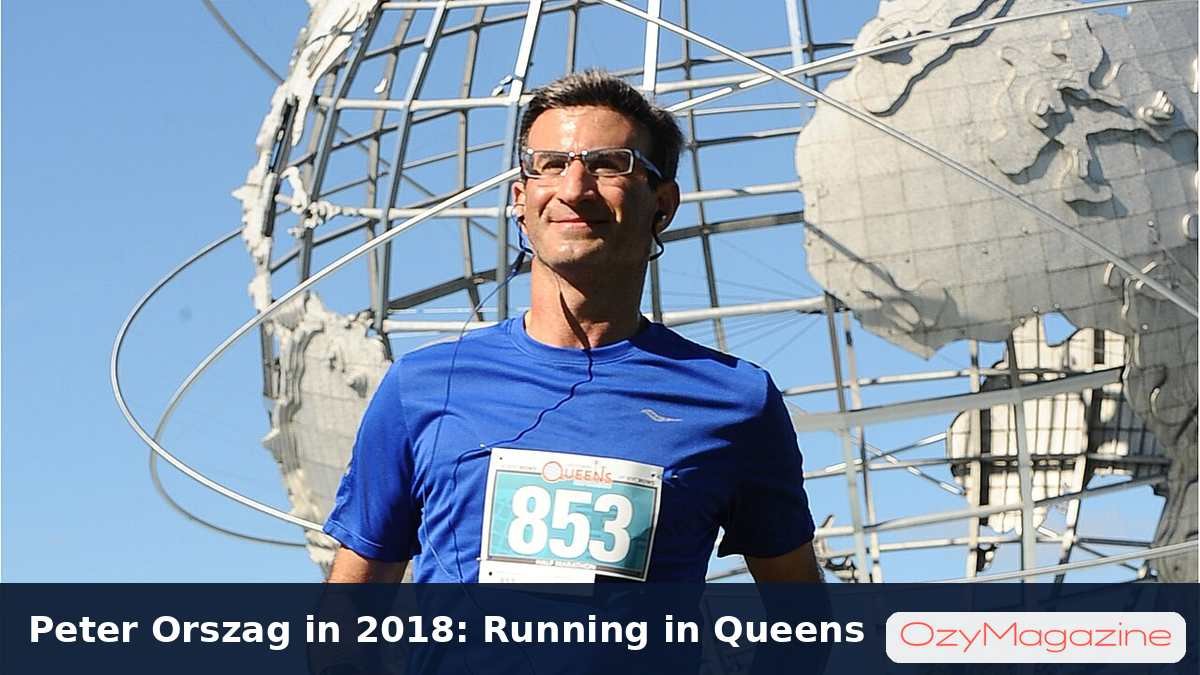
Color tells the real story of the timeline. The 2009 budget-director portraits show dark hair with early threads of gray at the temples, while the 2018 running photograph further down this page shows a head already well salted with silver. Between those two frames sit the Citigroup years, covered by the 2015 photograph that appears later in this article.
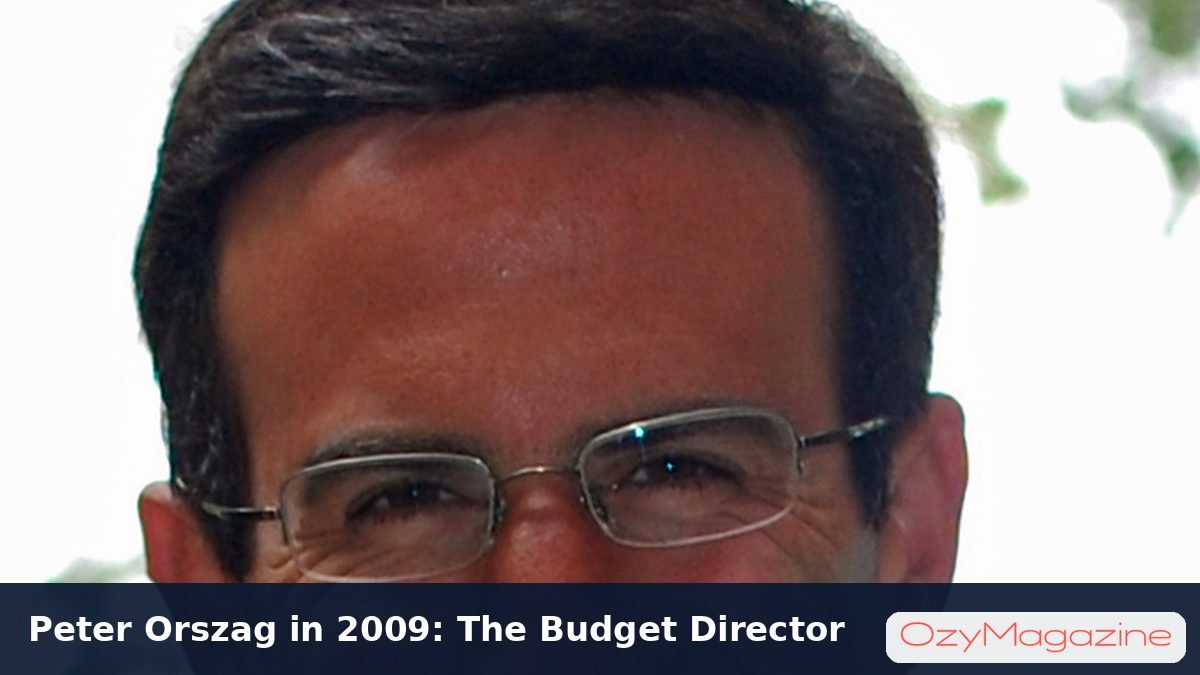
The hairline, often the loudest part of the argument, was always high on his forehead, even in his thirties. A forehead that starts tall makes later photographs look more dramatic than the underlying change, which the dated sequence shows to be gradual. Gradual is the operative word, because sudden change is what the rumor requires and the record never supplies.
What Dated Photographs Can and Cannot Prove
A dated photograph is a small, honest document. It fixes how a person looked on one day, in one light, from one angle, and a run of them across years can show direction: darker to grayer, fuller to somewhat thinner.
What no photograph can do is name a cause. Thinning in a picture cannot distinguish age from illness, stress from genetics, or a shorter haircut from actual loss, which is why careful coverage describes appearance and stops there.
Photographs also cannot prove a negative about what sits on a head. They can show that hair looks consistent across hundreds of appearances, in wind, rain and studio glare, and that consistency, not any single frame, is the strongest evidence available. It is also, not coincidentally, the kind of evidence a courtroom would prefer over any single dramatic exhibit.
Peter Orszag Wig: Where Did the Rumor Start?
The rumor has a birthday. On January 12, 2010, the gossip site Gawker published a piece asking whether the budget director’s hair was really a toupee, comparing photographs from 2008 and 2009 and inviting readers to judge the difference for themselves. The piece was sport, in the house style of a site treating Washington vanity as a contact game.
Context explains the joke’s timing. Orszag was then among the most visible officials in Washington, a young budget chief whose personal life drew magazine coverage, and his neat, unmoving hairstyle became an easy running gag for a press corps covering deficits daily. Unusually for a budget official, he was also a genuine magazine-profile subject, which kept the focus personal.
Our earlier profile of the peter orszag wig question traced the same trail and reached the same resting place: the story was a 2010 newsroom joke that search engines never let die, not a claim any outlet substantiated then or since. Gawker itself moved on within days; the search box never did, and the phrase kept compounding interest.
Wig, Toupee, and Hair System: What Do These Words Actually Mean?
The three terms get used as if they were interchangeable, and they are not. A wig covers the whole head, hair and scalp alike, and is taken off and put on like a hat, usually for fashion, performance or medical hair loss. Because a wig replaces everything, it is also the easiest to spot in photographs over time.
A toupee is smaller and older-fashioned: a partial piece that covers one zone, traditionally the crown, and blends into the wearer’s remaining hair around it. The word carries a comic ring, which is exactly why headline writers reached for it in 2010. The word does half the joke’s work before any fact is examined, which should make readers suspicious.
A hair system is the modern trade term for a custom partial or full piece bonded or clipped to the head for weeks. All three are legitimate products; the point is that alleging one requires evidence, and for Orszag none has surfaced. Specialists who fit these pieces can usually recognise one; none has come forward in his case.
Has Peter Orszag Had a Hair Transplant?
No report from any outlet of standing says so, and the visual record argues against the idea on its own terms. Transplants announce themselves through a changed hairline or a sudden gain in density, and his hairline has only ever moved in one direction, slowly backward. Surgeons’ galleries show what correction looks like; his timeline contains no such discontinuity.
The gray progression argues the same way. Dyed or restored hair tends to hold its color story steady, while his photographs show an unbroken, natural-looking fade from dark brown in 2009 to mostly silver in recent Lazard portraits and broadcasts. Color, in short, behaves exactly as untreated hair behaves, year after year, frame after frame.
So the transplant file matches the wig file: empty. What exists is a search suggestion box that pairs his name with procedures, because enough people typed the question, and a complete absence of confirmation from doctors, spokespeople or the man himself. Silence is not evidence either way, but after sixteen years it leaves the photographic record as the only witness.
Peter Orszag Net Worth and Pay in 2026
No audited net-worth figure exists for Orszag, and any page printing one to the dollar is guessing. What can be documented is narrower and better: a disclosed pay package, a disclosed shareholding, and a range of published estimates that can be weighed against both.
The documented floor starts with ownership. Filings reported in May 2026 put his Lazard holding at roughly 210,942 shares, worth over $10 million at the time, and the fiscal 2025 proxy valued his annual pay at $13.72 million, as the net worth trackers on this site record for executives of his level.
Against that floor, published estimates for 2026 cluster between about $10 million and $37 million. The spread is wide because private assets, property and two decades of banking bonuses are not public, so the honest summary is a documented eight-figure floor, not a precise fortune. That floor excludes his Citigroup years entirely, which colleagues described as handsomely paid.
Why Do People Keep Searching for Peter Orszag Bald?
Part of the answer is arithmetic. A budget director is supposed to look like an actuary, and Orszag arrived young, marathon-fit and unusually polished for the role, which made Washington treat his appearance as part of the story from the beginning. Profiles lingered on the marathon running, the sharp suits, the air of a man cast rather than appointed.
Part is the durability of a good joke. The 2010 toupee piece was funny, screenshot-friendly and endlessly re-quotable, and every later television appearance, on CNBC or Bloomberg, refreshes the same curiosity in viewers who half-remember it. Each appearance produces fresh screenshots, and undated screenshots are the rumor’s favorite fuel.
And part is how search now works. Once a phrase is typed often enough, engines suggest it to everyone who types his name, so a rumor from 2010 keeps recruiting new searchers in 2026 without a single new fact arriving to feed it. Understanding that mechanism is most of the cure: the phrase trends because it trended.
What This Article Does Differently
The method used here can be copied by any reader in five minutes. Start with photographs that carry dates, line them up in order, and describe only what changes between them: color first, coverage second, and nothing that a picture cannot show. Follow that discipline and most appearance mysteries shrink to ordinary stories.
Next, separate claims by their evidence. A statement from the man himself would settle the hair question outright; none exists. A named doctor, a stylist, a document: none exists either. What remains is the photographic sequence, and it points one way. It points toward ordinary aging, documented unusually well because the man worked in public for so long.
Finally, notice when pages repeat each other word for word. Repetition is not corroboration; ten copies of one guess are still one guess. The verdict on this page rests on the dated pictures and the disclosed record, and on nothing else. Readers can test it: the photographs and filings are public, and the conclusion follows.
Verified vs Unverified: Quick Verdict Table
The claims around this search term sort cleanly into two piles: things the dated record supports, and things that have only ever been repeated. The table below keeps the piles apart, claim by claim, so readers can see exactly where the evidence ends.
| Claim | Standing |
|---|---|
| He is completely bald | Contradicted by recent photographs |
| His hair has grayed heavily | Confirmed by the dated photographs |
| His hairline has receded somewhat | Consistent with the dated photographs |
| He wears a wig or toupee | No verified evidence |
| He has had a hair transplant | No verified evidence |
| He has commented on his hair | No public comment on record |
Read the two piles together and the shape of the story is plain. Everything in the confirmed pile is ordinary aging, and everything in the other pile is a 2010 joke that repetition dressed up as a mystery.
Peter Orszag Family Life in Brief
Orszag’s first marriage, to Cameron Rachel Hamill, produced two children and ended in divorce. A third child followed in 2009, with his former girlfriend Claire Milonas, and a child-support case between Orszag and his first wife ended in his favor in 2014. The episode drew tabloid attention at the time precisely because his public image was otherwise so controlled.
In 2010 he married the journalist Bianna Golodryga, then a co-host of ABC’s weekend morning show, and the couple have a son and a daughter. Five children in all, across a private life that Washington’s gossip pages once covered far more closely than his budgets. That says more about the gossip pages than the marriage, which has lasted since 2010.

The running photograph at the top of this page belongs in the family frame too. Distance running was his documented release valve through the Washington years, and the 2018 Queens half-marathon picture shows the same short, graying hair the rumor mill keeps debating. He was 49 in that picture, and his hair is the simplest rebuttal the rumor has faced.
Frequently Asked Questions
Is Peter Orszag bald?
No. Recent photographs show short hair covering his crown and sides, now mostly gray. His hairline has edged back since 2009 and the color has changed, but no current image shows a bare or shaved scalp. The distinction matters, because thinning at the temples is not the same thing as baldness.
Does Peter Orszag wear a wig?
Nothing in the verified record supports the idea. It began as a January 2010 Gawker joke built on two photographs, and no outlet, stylist or colleague has ever substantiated it in the years since the joke first appeared in print.
Does Peter Orszag wear a toupee?
The same answer applies, because the words describe the same allegation. A toupee is a partial hairpiece for the crown, and nothing in the public record shows Orszag wearing one at any point in his career, in any photograph, broadcast or public appearance on record.
What is Peter Orszag hair like now?
Short, neat and predominantly gray, in the same business cut he has worn for decades. Lazard’s own portraits and his television appearances in 2025 and 2026 all show that consistent, silvered version of the style, parted the same way it has been since his thirties.
Has Peter Orszag had a hair transplant?
No credible report says he has. A transplant usually redraws the hairline or restores density, while his photographs show the opposite journey: a slow recession and a steady graying that no procedure has visibly interrupted at any stage.
How old is Peter Orszag?
He is 57. Born on December 16, 1968, in Boston, he turns 58 on December 16, 2026, an age that makes the gray hair and modest recession in his recent photographs entirely ordinary for a man who has never hidden either.
What is Peter Orszag known for?
Budgets and deals. He directed the Congressional Budget Office, then the Office of Management and Budget under President Obama, spent six years at Citigroup, and now runs Lazard as its chief executive and chairman, a post he has held since the start of 2025.
Has Peter Orszag ever responded to the hair rumors?
No. He has never addressed the wig jokes, the transplant guesses or the bald question in any public statement, interview or filing. The entire discussion has happened without a single word from its subject, which may be the most dignified response available to him.
What is Peter Orszag’s net worth in 2026?
It is not officially disclosed. His Lazard shares alone were worth over $10 million in May 2026 filings coverage, his fiscal 2025 pay was $13.72 million, and published estimates place the total between roughly $10 million and $37 million, none of them confirmed by him or by Lazard.
Conclusion
The bald question dissolves under its own evidence. Line up the dated photographs from the 2009 budget fights to the Lazard years and they show one continuous head of hair, dark becoming gray, a tall hairline retreating slowly, and no sudden change of any kind.
The rumor, by contrast, has exactly one document behind it: a funny 2010 magazine piece that asked a question it never answered. Everything since has been repetition, and repetition is not proof, however many search results it fills.
The man underneath the query is easier to summarise than the myth. An economist who ran two budget offices before he turned 42, then climbed to the top of Lazard, deserves to be searched for the work; the hair, on the record, is simply hair.